
That white, flaky film on your hood isn’t just an eyesore; it’s the sound of your car’s resale value hitting the pavement. For many drivers, seeing those first signs of peeling is a high-stress moment that leads to a lot of questions. You might wonder if you’re looking at simple wax build-up or the beginning of a total finish failure. If you’ve been searching for clear coat repair Kingston, you’ve likely realized that our local climate doesn’t play fair with your vehicle’s exterior.
We understand how frustrating it is to watch a well-maintained car start to look old before its time. It’s common to fear that the only solution is an astronomical body shop bill, but catching the damage early can change the outcome. This guide will help you identify the exact stage of your clear coat’s condition and explain the professional restoration process. We will also show you how to maintain that vital protective layer so your car can withstand the rigours of Ontario winters and corrosive road salt.
Key Takeaways
- Use the simple “Fingernail Test” at home to determine if your vehicle has a minor surface scratch or is facing serious clear coat failure.
- Understand how the “Lake Effect” humidity and winter road salt in Kingston accelerate paint damage and threaten your car’s structural integrity.
- Learn why professional clear coat repair Kingston requires a controlled refinishing environment to ensure a dust-free, durable finish.
- Discover how timely restoration prevents expensive body panel replacements by sealing out moisture before rust takes hold.
- Find out how a lifetime warranty on workmanship provides the peace of mind and long-term protection that a DIY fix or simple detailing cannot match.
What is Clear Coat and Why is it Failing on Your Vehicle?
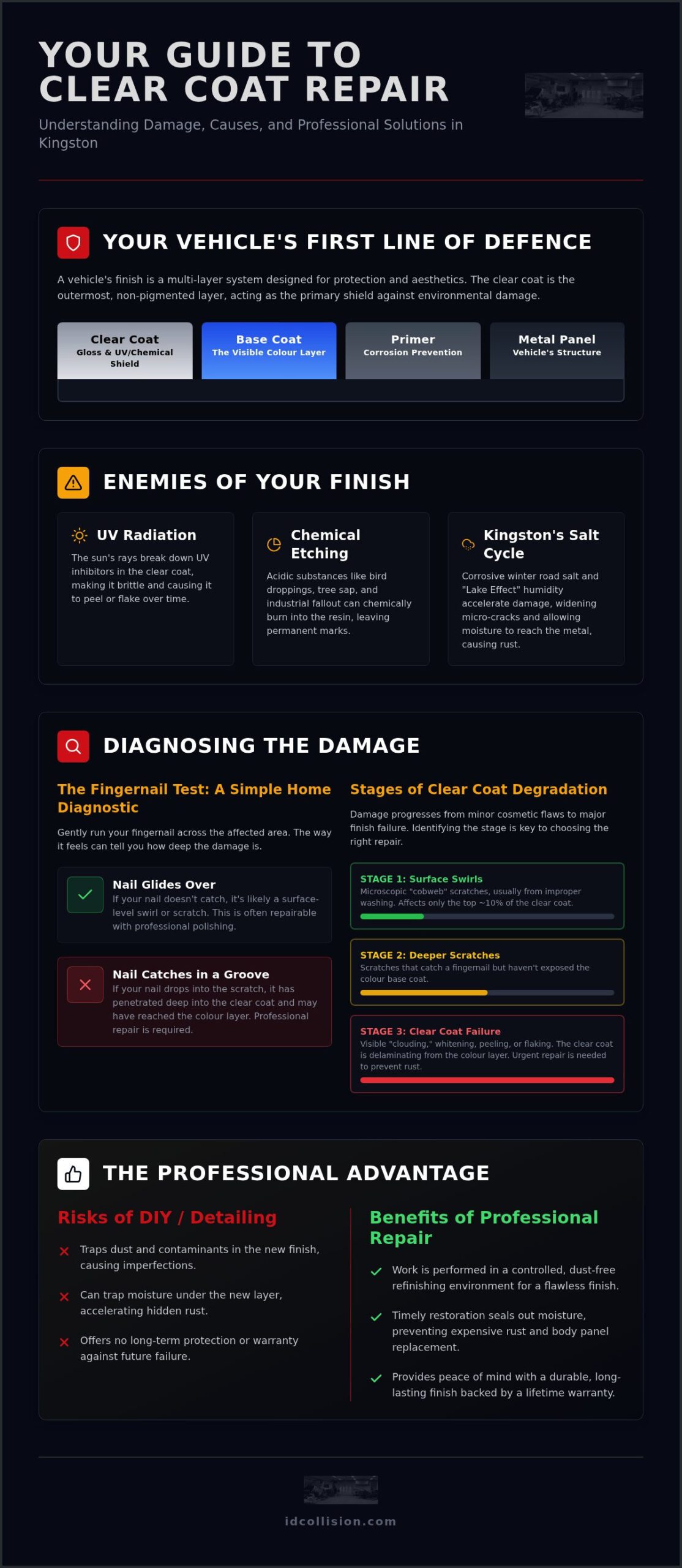
Your vehicle’s finish is more than just a cosmetic choice. It’s a sophisticated, multi-stage engineering feat designed to protect the metal body panels from the elements. To understand why you might need What is Clear Coat repair, you first need to understand how your car is painted. Most modern vehicles use a three-layer system. First, a primer is applied to the bare metal to prevent corrosion and provide a smooth surface. Next comes the base coat, which is the actual colour layer. Finally, the clear coat is applied. This is a non-pigmented resin layer that provides the glossy shine and, more importantly, the primary shield against the environment. Think of it as your car’s first line of defence. If you are noticing peeling or dullness, seeking clear coat repair Kingston services early can prevent the damage from reaching that expensive colour layer.
The Role of UV Protection in Modern Paint
Think of your clear coat as high-SPF sunscreen for your car. The sun’s UV radiation is incredibly destructive to automotive pigments. Without this protective resin, the vibrant colour you bought would fade and turn chalky within a few years. Clear coat is the barrier that prevents the base coat from oxidizing. Over time, the UV inhibitors within the resin begin to sacrifice themselves to protect the paint. This is a deliberate chemical process. Once these inhibitors are exhausted, the clear coat becomes brittle and loses its flexibility. It starts to delaminate, leading to the flaking appearance many drivers recognize as clear coat failure. In our region, those long summer days provide plenty of radiation to accelerate this breakdown if the finish isn’t maintained.
Chemical Etching: From Bird Droppings to Road Salt
In Kingston, our vehicles face a unique set of chemical challenges. Acidic substances like bird droppings, tree sap, and industrial fallout don’t just sit on the surface. They actually perform a slow-motion chemical burn into the resin. This is known as etching. If these contaminants aren’t removed quickly, they can eat deep into the clear coat and leave permanent marks. This is especially true in urban areas where industrial particles can settle on your hood.
The “Salt Cycle” is particularly brutal for local drivers. Winter road salt is highly corrosive. When it gets trapped in microscopic cracks in your finish, it begins to widen those gaps through constant chemical reaction. Minor surface etching might only require a light polish, but deep-layer penetration requires professional clear coat repair Kingston specialists to restore the seal. Once that seal is broken, moisture can reach the metal. This turns a simple cosmetic blemish into a structural rust problem that threatens the longevity of your vehicle.
Diagnosing the Damage: Scratches vs. Clear Coat Failure
Recognizing the difference between a minor cosmetic flaw and a structural breakdown is the first step in protecting your vehicle’s value. Many drivers feel a sense of dread when they spot a blemish, unsure if they are looking at a simple fix or a major repair. To help you understand the situation, we categorize paint issues into a clear hierarchy of damage. This range starts with light surface swirls and moves toward deep scratches, eventually resulting in full delamination. Identifying where your car sits on this scale is essential for choosing the right clear coat repair Kingston strategy.
Before you assume the worst, try the “Fingernail Test” at home. Gently run your nail across the affected area. If your nail glides over the mark without catching, it’s likely a surface-level defect. If your nail drops into a groove, the scratch has penetrated deep into the resin. However, the most concerning signs aren’t always scratches. If you notice “clouding” or “whitening” in specific spots, it’s an early warning that the clear coat is beginning to separate from the colour layer. This is a chemical failure, not a physical one, and it requires a different level of care.
Stage 1 & 2: Surface Scratches and Swirls
Most vehicles on the road today have Stage 1 defects. These are microscopic swirls and light “cobwebbing” usually caused by automatic car washes or improper drying techniques. These imperfections only affect the top 10% of your protective layer. If the damage is this shallow, a professional paint scuff repair Kingston service can often level the surface and restore the gloss without a full respray.
Stage 2 involves deeper scratches that have not yet reached the pigmented paint. While The Professional Clear Coat Repair Process for these marks often involves paint correction, it’s a delicate balance. We remove a microscopic amount of the surrounding clear coat to make the scratch disappear. It’s a precise task that ensures enough resin remains to protect the colour beneath.
Stage 3: Delamination (The “Peeling” Effect)
This is the critical stage where the protective seal has failed entirely. Delamination often looks like a “sunburn” on a car’s roof, hood, or trunk. It happens when the chemical bond between the colour coat and the clear coat breaks down. You’ll see actual flakes of clear resin lifting away, leaving a dull, vulnerable patch of paint exposed.
The #1 misconception we hear is that you can “polish out” peeling clear coat. You can’t. In fact, using a polisher on an area that is already delaminating will only tear more of the resin away and make the damage worse. Once peeling begins, your base coat is completely exposed to moisture and salt. If you’ve spotted these signs, it’s a good idea to get a professional assessment before the damage spreads to the rest of the panel and leads to oxidation.
The Professional Clear Coat Repair Process: How-to and Expectations
A professional restoration is a world away from a quick “spray and go” job. When you seek out clear coat repair Kingston, you are investing in a multi-stage refinishing process that prioritizes chemistry and precision over speed. True restoration requires a controlled environment. Even a single speck of dust or a stray fingerprint can ruin the bond between paint layers. This is why we perform all refinishing in a specialized spray booth that filters out contaminants. While spot repairs might seem tempting, we often recommend panel blending. This technique ensures the new finish flows seamlessly into the original paint, making the repair invisible to the naked eye.
Step 1: Surface Preparation and Decontamination
The foundation of any lasting finish is the preparation. We start by meticulously sanding away the failed resin. This step is delicate. We must remove every trace of the Causes of Clearcoat Delamination without grinding into the metal body panels. Once the damaged layer is gone, the surface undergoes deep decontamination. Removing old wax, grease, and road oils is critical because even microscopic residue will prevent the new clear coat from adhering. You can learn more about the technical precision required during automotive refinishing Kingston by exploring our guide to preparation science. Without a perfectly clean surface, the new finish won’t last through a single season.
Step 2: Base Coat Correction and Blending
If your clear coat has been peeling for a while, the colour layer underneath has likely suffered from exposure. We don’t just cover up the damage. We refresh the base coat to ensure the colour is vibrant and consistent. Using digital colour matching technology, we identify the exact paint code and variance for your specific vehicle. This is vital for both domestic and import paint systems, which often use different chemical compositions. We then use a blending technique, tapering the new colour into the adjacent panels. This prevents the “patchwork” look that often plagues low-quality repairs. It’s a methodical approach that ensures your car looks like it just rolled off the factory floor.
Step 3: Application of High-Solids Clear Coat
The final step is the application of a high-solids clear coat. This is a premium resin that provides superior UV protection and a deep, mirror-like gloss. We apply several layers in our temperature-controlled booth to achieve the correct thickness. After application, the vehicle undergoes a bake cycle. Using specialized heat lamps or booth heaters, we cure the finish at specific temperatures. This hardening process is what gives the clear coat its durability against stone chips and road salt. It’s a protective shield that preserves your car’s integrity for years to come. Once the cycle is complete, the result is a factory-grade finish that carries the weight of professional craftsmanship.
Kingston’s unique geography presents a perfect storm for automotive finishes. Being situated right on the water means we deal with constant humidity fluctuations known as the “Lake Effect.” For your vehicle, this moisture acts as a catalyst for decay. In a desert environment, a small clear coat scratch is purely cosmetic. In our region, that same scratch allows humid air to seep between the layers, weakening the bond between the paint and the primer. This is why clear coat repair Kingston isn’t just about aesthetics; it’s about sealing your car against a relentless local climate.
Winter Road Salt and Micro-Cracks
The biggest threat to your finish arrives with the first snowfall. Road salt is a necessity for safety, but it’s a disaster for compromised paint. When salt dissolves in slush, it creates a brine that enters micro-cracks in your clear coat. Through a process called osmotic pressure, this salt brine actually pulls more moisture into the crack, forcing the layers of paint apart from the inside out. This internal pressure is what causes that familiar peeling effect to spread so rapidly during the winter months.
Waiting until the spring thaw to fix a scratch is a gamble that rarely pays off. By the time the weather warms up, that tiny chip has often blossomed into a much larger area of delamination or, worse, a bubbling patch of rust. We recommend regular underbody and surface washes throughout the winter to keep salt from dwelling on your finish. If you’ve noticed a new chip after a highway drive, book a free repair estimate to seal the damage before the salt cycle takes hold.
UV Exposure on the 401 and Beyond
Kingston drivers often spend significant time commuting on the 401 or Highway 15. This high-speed travel increases physical abrasion from road debris, sand, and tiny stones kicked up by trucks and other vehicles. Every one of these impacts creates a microscopic “entry point” in your protective resin. While you might not see them at first, these tiny pits allow environmental pollutants to begin the etching process.
The sun’s impact is also deceptively high in our region. During the winter, the sun reflects off the snow, effectively doubling the UV radiation hitting your car’s horizontal surfaces like the hood and roof. This “double hit” of radiation accelerates the breakdown of the UV inhibitors in standard factory finishes. Modern refinishing products used in professional shops contain high-grade UV inhibitors specifically designed to withstand this intensity. By choosing a professional restoration, you’re giving your car a much stronger shield than the one it originally came with.
Why Choose Professional Clear Coat Repair at ID Collision?
Choosing the right team for clear coat repair Kingston is about more than just restoring a shiny finish. It’s about ensuring your vehicle remains sealed against the elements for the long haul. At ID Collision, we take our role as protective experts seriously. We don’t just fix the surface; we restore the integrity of your car’s exterior so you don’t have to worry about rust or further delamination down the road. Our approach combines technical precision with a neighborly commitment to doing things correctly the first time.
The ID Collision Lifetime Warranty
Our lifetime warranty on all workmanship is a core part of our commitment to your vehicle’s longevity. This isn’t a standard 30-day or one-year guarantee that you might find at a typical detailing shop. Our warranty specifically covers failures such as peeling, cracking, or premature fading. We provide this level of protection because we only use factory-standard resins and materials that meet the original manufacturer’s specifications. We believe that if a repair is done right, it should last for as long as you own the vehicle. This guarantee gives you the peace of mind that your investment is protected against the harsh Ontario climate.
Direct Insurance Coordination for Kingston Drivers
We realize that clear coat damage isn’t always a result of age or UV exposure. Sometimes it’s caused by an accident, a parking lot scrape, or even vandalism. In these high-stress situations, we step into the role of your principled advocate. We coordinate directly with all major Canadian insurance companies to handle the technical paperwork and ensure the restoration is covered appropriately. It’s your right under Ontario law to choose your own repair centre, regardless of which facility your insurance provider might suggest.
If your vehicle requires more extensive work beyond a simple finish restoration, such as collision repair Kingston Ontario, we manage the entire process under one roof. We take the burden of the repair off your shoulders, from the initial estimate to the final bake cycle in our spray booth. Our goal is to provide a steady, methodical path toward restoration, ensuring your car is returned to you in showroom condition with its structural integrity fully intact.
Protect Your Vehicle’s Future Today
Seeing your car’s finish begin to flake or dull is a high-stress experience, but it’s a challenge you can resolve with the right expertise. We’ve explored how early diagnosis and professional refinishing are the only ways to truly stop the spread of delamination. In our local climate, your vehicle’s clear coat is the primary barrier against corrosive road salt and high humidity. Choosing professional clear coat repair Kingston ensures that this protective seal is restored to factory standards, preventing minor cosmetic flaws from becoming expensive structural issues.
At ID Collision, we take the burden off your shoulders by offering a Lifetime Warranty on all workmanship and managing direct insurance billing on your behalf. Whether you drive a domestic or an import, our expert colour matching ensures a seamless, invisible result. You have the right to a repair that lasts, and we’re here to provide it.
Get a Free Estimate for Your Clear Coat Repair in Kingston
Your car is an investment that deserves to look its best. Let’s get your vehicle back to its showroom glory so you can drive with pride again.
Frequently Asked Questions
Can I fix peeling clear coat myself with a spray can?
No, we don’t recommend using consumer-grade spray cans for a permanent restoration. These products lack the high-solids resin and professional UV inhibitors required to create a durable, long-term bond. A DIY fix often results in a patchy, dull finish that will likely peel again within a few months, potentially making the eventual professional repair more difficult and expensive.
How much does it cost to repair clear coat on a single panel in Kingston?
The cost for a professional clear coat repair Kingston depends on the size of the affected panel and the severity of the delamination. A large surface like a roof or hood requires more preparation and material than a smaller fender or door. We provide free, no-obligation estimates to give you an accurate price based on your vehicle’s specific condition and paint code.
Is clear coat failure covered by my car insurance policy?
Insurance coverage typically depends on the underlying cause of the failure. If the clear coat is peeling due to the vehicle’s age or sun exposure, it’s generally considered a maintenance issue and is not covered. However, if the damage is the result of a collision, vandalism, or a specific environmental incident, your policy might apply. We can help you navigate the claims process if the damage qualifies.
How long does a professional clear coat repair take at a body shop?
You should expect the repair to take between two and four business days. This duration is necessary to complete the meticulous cleaning, sanding, and multi-stage refinishing process. We also include a specific bake cycle in our spray booth to ensure the new finish is fully cured and hardened before the vehicle is exposed to the elements.
Will the new clear coat match the rest of my car perfectly?
Yes, your repaired panel will match the rest of your vehicle through our digital colour matching and blending techniques. We use specialized software to identify the exact variance of your factory paint. By tapering the new finish into adjacent panels, we ensure there are no visible lines or colour shifts, leaving the repair completely invisible to the naked eye.
What happens if I ignore peeling clear coat for too long?
Ignoring the problem allows moisture, humidity, and road salt to penetrate the base coat and reach the metal body panels. Once the protective seal is gone, the metal will begin to oxidize and rust. What starts as a small, flaky patch can quickly evolve into a structural issue that requires a full panel replacement instead of a simpler refinishing job.
Can paint correction or polishing fix a peeling clear coat?
No, polishing and paint correction are designed to remove light scratches, not to fix delamination. Polishing works by thinning the existing clear coat to level out imperfections. If your clear coat is already peeling, a polisher will only tear more of the resin away and make the damage worse. Peeling is a sign that the protective layer has failed and must be replaced.
Does the ID Collision lifetime warranty cover the new clear coat finish?
Our lifetime warranty specifically covers the workmanship and materials used in your new clear coat finish. This includes protection against future peeling, cracking, or fading for as long as you own the vehicle. We use factory-standard materials to ensure the repair meets the highest level of durability, providing you with long-term peace of mind.