
Imagine driving down Princess Street on a frigid January morning when you hear that sharp, metallic “clack” of a stone hitting your glass. By the time you reach your destination, the sub-zero temperatures and your car’s heater have turned a tiny speck into a jagged line. It’s a high-stress moment that leaves you wondering if you need a full cracked windshield replacement or if a quick resin fix will do. You might worry about the crack spreading further in the Kingston cold, feel confused by insurance deductibles, or feel anxious that your vehicle’s advanced safety sensors won’t function correctly after a repair.
We believe you deserve a clear path forward without the technical jargon or insurance runaround. This guide provides a definitive framework to help you decide when to repair or replace your glass, including why damage larger than a loonie is a safety red flag. We will walk you through the legal standards under the Ontario Highway Traffic Act, your rights in an insurance claim, and why professional recalibration is essential for your vehicle’s safety sensors. Let’s clear the fog and get you back on the road with confidence.
Key Takeaways
- Understand the critical role your windshield plays in maintaining your vehicle’s structural integrity and ensuring proper airbag safety.
- Learn how to apply the “Toonie Rule” to determine if you need a simple repair or a full cracked windshield replacement.
- Discover why Kingston’s specific climate makes immediate action essential to prevent small chips from spreading into dangerous cracks.
- Gain clarity on your legal rights in Ontario regarding insurance claims and your freedom to choose where your car’s fixed.
- See why professional recalibration of your vehicle’s safety sensors is a non-negotiable step after any glass installation.
Why Your Windshield is More Than Just a Window
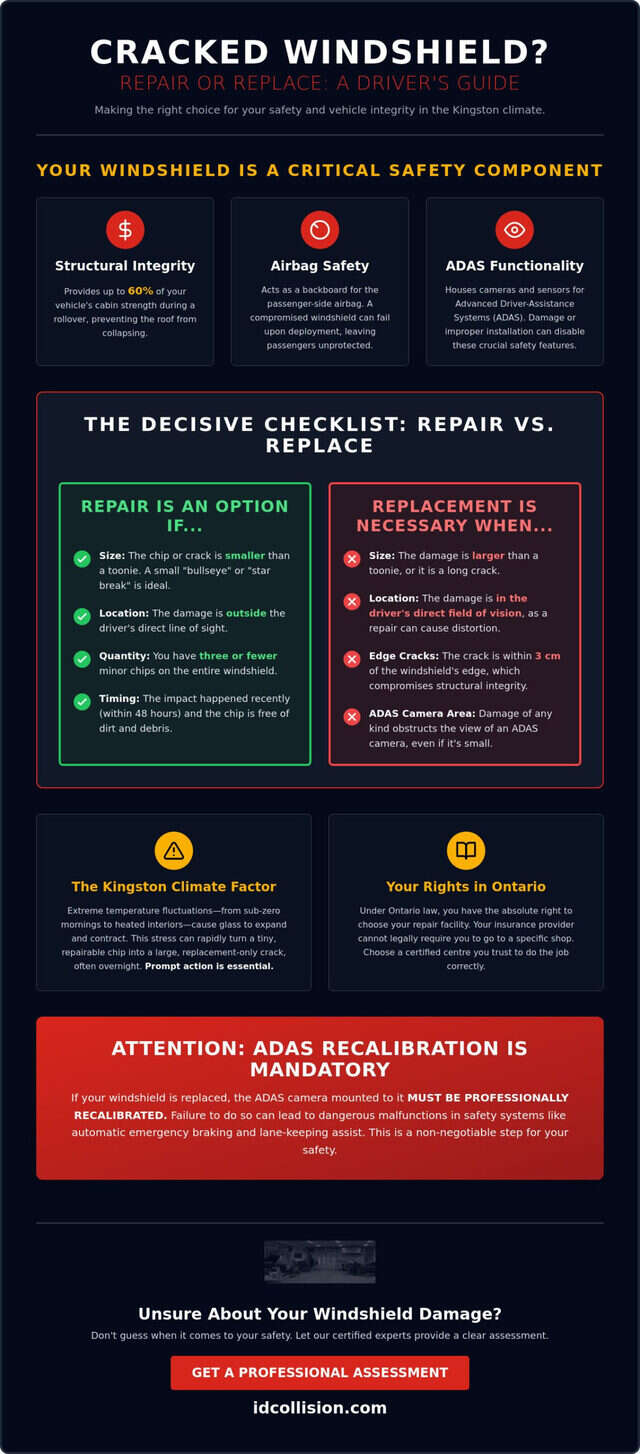
It’s easy to think of your windshield as just a transparent barrier against the wind. In reality, it’s a sophisticated piece of safety equipment. Most drivers don’t realize that their windshield is a vital structural component, responsible for up to 60% of the cabin’s strength during a vehicle rollover. It acts as a backbone for your car’s roof, preventing it from collapsing inward during an accident. This structural support isn’t just a bonus; it’s a fundamental part of your vehicle’s safety engineering.
Beyond the frame, the glass serves a critical role in how your safety systems function. For example, the passenger-side airbag is designed to deploy upward and strike the windshield before expanding toward the passenger. If the glass isn’t securely bonded or is compromised by a deep fracture, the force of the airbag can actually push the windshield out of its frame. This leaves the passenger unprotected in a collision. This is why a cracked windshield replacement is about much more than just aesthetics; it’s about maintaining the engineered safety of your vehicle.
Modern vehicles are built using laminated safety glass, which consists of two layers of glass with a vinyl interlayer. This construction ensures that even when the glass breaks, it stays in one piece rather than shattering into dangerous shards. When you see a crack, you aren’t just looking at a blemish; you’re looking at a breach in your car’s primary safety shield.
The Structural Integrity Factor
The strength of your windshield depends entirely on the integrity of the bond between the glass and your vehicle’s frame. When a professional technician performs an installation, they use high-modulus adhesives that create a structural weld. If you have a single crack, the tension of the entire glass pane is compromised. Much like a tiny tear in a sail, that crack allows the stress of the road to concentrate in one spot. This makes the glass far more likely to fail under pressure, especially during the extreme temperature shifts we see in Kingston.
Modern Tech: ADAS and Your Glass
If your car was made in the last few years, it likely features Advanced Driver-Assistance Systems (ADAS). These systems rely on cameras and sensors mounted directly behind the glass to monitor lane departures and automatic braking. Even a slight distortion or “ghosting” in low-quality glass can confuse these sensors, leading to potentially dangerous system errors. This is why we insist on glass that meets original equipment standards. Recalibration is a non-negotiable step in the cracked windshield replacement process. Without it, your car’s safety tech is essentially flying blind, unable to accurately judge distances or road markings.
Repair vs. Replace: The Kingston Driver’s Checklist
Deciding whether to patch a chip or commit to a full cracked windshield replacement often feels like a guessing game. To make it easier, we use a clear set of criteria based on the glass being a critical safety component that must perform perfectly under pressure. Not every blemish requires a total overhaul, but certain types of damage are non-negotiable for your safety.
The simplest test you can perform at home is the Toonie Rule. If the impact point or the resulting chip is larger than a two-dollar coin, the structural bond of the glass is likely too compromised for a resin fix. Beyond size, location is the most important factor. If a chip is directly in your field of vision, a repair is usually out of the question because the resin can leave a slight distortion that interferes with your view of the road. We also look for edge cracks. Any damage located within three centimetres of the frame is considered a structural failure. Because the edges of the glass are under the highest amount of tension, these cracks are almost guaranteed to spread across the entire pane.
Finally, we consider the “Three-Chip Limit.” While a single repair is effective, a windshield with four or more separate repair points starts to lose its overall strength. If you aren’t sure which category your damage falls into, our team can provide a professional glass assessment to ensure your vehicle remains roadworthy and safe for your family.
When a Simple Repair is the Right Choice
A repair is a fantastic, cost-effective option for small “bullseyes” or “star breaks” that haven’t yet begun to spiderweb. For a successful resin injection, the damage must be shallow and, most importantly, clean. You should aim to have a chip repaired within 48 hours of the impact. If you wait longer, road salt, dirt, and windshield washer fluid will seep into the break, making it impossible for the resin to bond clearly. Once cured, a professional repair will restore the structural integrity and significantly improve the visual clarity, though a tiny “ghost” mark may remain.
When Replacement is Unavoidable
There are times when a cracked windshield replacement is the only responsible path forward. If a crack is longer than 15 centimetres (about six inches), the resin cannot provide enough surface area to bond the glass back together safely. Similarly, if the damage has penetrated the inner layer of the laminated glass, the structural “sandwich” is broken. We also see many vehicles in Kingston with severe pitting. This “sandblasted” look comes from years of Highway 401 sand and salt spray. While there are no large cracks, the thousands of tiny pits catch the glare of oncoming headlights, making night driving dangerous and necessitating a new windshield.
Navigating Insurance Claims: Your Rights in Ontario
Dealing with an insurance claim after a rock chip shatters your peace of mind is often frustrating. You might feel pressured to visit a specific national chain suggested by your provider’s call centre. In Ontario, you have the legal right to choose your own repair facility. This is a critical protection for every driver. Insurers sometimes use a tactic called “steering” to direct you toward their preferred vendors, but the final decision rests entirely with you. You shouldn’t have to compromise on who handles your vehicle’s safety.
Most glass damage falls under your comprehensive coverage rather than collision. This typically includes damage from stones kicked up on the highway, fallen branches, or extreme weather. Because these are generally considered “not-at-fault” incidents in Ontario, filing a claim for a cracked windshield replacement should not increase your insurance premiums. We believe in transparency, so we help you understand exactly what your policy covers before any work begins.
When we manage your claim, we ensure the glass used meets or exceeds the Federal Motor Vehicle Safety Standards. These regulations dictate the strength and clarity required for automotive glazing. Using high-quality glass isn’t just about a clear view; it’s about fulfilling the legal and safety requirements that protect you in a crash. We act as your knowledgeable ally, standing between you and the complex paperwork of the insurance world.
Understanding Your Deductible
If you catch a chip early enough for a resin repair, many Ontario insurers will waive your deductible entirely. This is a significant incentive to act quickly, as it often means the repair costs you nothing out of pocket. For a full cracked windshield replacement, you will usually be responsible for your comprehensive deductible. In 2026, these deductibles typically range between C$250 and C$500. We coordinate directly with your insurance adjuster to ensure all costs are documented correctly, minimizing your stress and administrative burden.
The Advocate Advantage
We take our role as your advocate seriously. Some insurers may push for the cheapest possible aftermarket glass to save on costs. We fight for “Like-Kind and Quality” (LKQ) or Original Equipment Manufacturer (OEM) glass, especially for vehicles with advanced safety sensors. Choosing a local professional means your lifetime warranty is backed by a neighbour you can visit in person, not a distant corporate office. We handle the communication with your insurer so you can focus on getting back to your daily routine with a safe, clear windshield. If your vehicle sustained broader damage in a collision, our team also specializes in body panel replacement in Kingston to ensure every aspect of your car’s structural integrity is fully restored.
The Kingston Factor: Why Our Climate is Hard on Glass
Living in Kingston means being intimately familiar with our wild temperature swings. One day it’s a damp zero degrees, and the next, a polar vortex brings us down to minus twenty. This constant fluctuation creates a “freeze-thaw” cycle that is incredibly punishing for automotive glass. When a small stone chip occurs, water from melting snow or rain seeps into the break. As the temperature drops overnight, that water freezes and expands with immense force. This expansion acts like a wedge, driving the layers of your glass apart and turning a minor nuisance into a situation requiring a full cracked windshield replacement.
Thermal shock is another major culprit. We’ve all been there: you’re running late, the car is encased in ice, and you blast the defrost on high. The sudden transition from sub-zero temperatures to high heat causes the glass to expand rapidly. If there is already a point of weakness, like a small chip, the glass can’t handle the stress and will often snap instantly. It’s a heart-sinking sound, but it’s a common reality for Eastern Ontario drivers. If you’ve noticed a new chip after your morning commute, it’s vital to act before the next cold snap. You can book a glass inspection today to see if your windshield can still be saved.
The Highway 401 corridor also presents unique risks. The high volume of transport truck traffic between Toronto and Montreal means Kingston drivers are constantly pelted with limestone aggregate and road debris. Combine this with the heavy use of road salt, which can actually degrade the integrity of the seal and the urethane bond around your glass over time, and you have a recipe for compromised safety. This environment makes a cracked windshield replacement more common here than in many other parts of the province. Many Kingston drivers who want to protect their vehicle’s appearance and value after a glass replacement also explore auto body customization in Kingston to restore or refresh their vehicle’s exterior finish to factory-level standards. Drivers who have experienced a more serious impact may also want to review our guide to collision damage repair and body panel replacement in Kingston to understand when crumpled or compromised panels need professional attention beyond the glass itself.
Proactive maintenance is essential for any asset exposed to the elements. While you look after your vehicle, companies like Maintenance Time Inc provide the same level of dedicated exterior care for residential and commercial properties, ensuring they stand up to the changing seasons.
Winter Stress and Crack Spreading
A chip that stayed stable all through August is a ticking time bomb once January arrives. The physics of thermal shock are unforgiving. While some drivers try to use clear tape to keep moisture out, this is only a temporary measure. It does not provide structural support. Once the temperature drops, the internal tension of the glass will eventually give way, causing the crack to “run” across your entire field of vision.
Local Road Realities
Debris on the Limestone City’s roads is often jagged and sharp. Commuting from Napanee or Belleville to Kingston exposes your vehicle to high-velocity impacts that penetrate deep into the laminated layers. Interestingly, our local humidity levels also play a role. Excess moisture in the air can interfere with how certain repair resins cure if the environment isn’t strictly controlled. This is why we perform all repairs in a climate-controlled facility to ensure the bond is permanent and clear.
Expert Glass Replacement at Insurance Direct Collision
When you’re faced with a damaged windshield, you need more than just a technician; you need an advocate who prioritises your family’s safety over a quick sale. At Insurance Direct Collision Centres LTD, our “Safety-First” assessment is the foundation of every job we take. We don’t believe in “good enough” when it refers to your vehicle’s structural integrity. If a chip is stable and meets our strict criteria for a successful resin bond, we will repair it. However, if the damage compromises the safety shield of your car, we will provide a precision cracked windshield replacement that restores your vehicle to its original factory standards.
Quality is found in the details that most drivers never see. We utilise high-modulus adhesives that create a structural bond between the glass and the frame, ensuring the roof remains supported and the airbags deploy correctly. This commitment to craftsmanship is why we offer the Insurance Direct Collision Centres LTD Lifetime Warranty. We stand behind our work for as long as you own your vehicle, giving you total peace of mind that your glass was installed with integrity and precision. Our service is comprehensive, covering everything from the initial glass fitment to professional ADAS recalibration and a final detailing to ensure your car is returned in pristine condition.
Our Precision Installation Process
A rushed installation is a dangerous installation. Our technicians use specialised removal techniques designed to protect your vehicle’s paint. Many discount glass shops accidentally scratch the metal pinchweld during removal, which leads to hidden rust that can cause the seal to fail years later. We take the time to prime and protect these surfaces. We also respect “cure times” for our adhesives. We will never rush you back onto the road before the bond has reached its Safe Drive Away Time. Every cracked windshield replacement ends with a rigorous final inspection to ensure a leak-free, wind-noise-free seal that stands up to the harshest Canadian weather.
The Local Kingston Commitment
As a locally owned business, we understand the specific challenges of driving in the Limestone City. We aren’t a distant corporate call centre; we are your neighbours, and we value our reputation for “Straight-Talk.” This means you get an honest assessment without hidden fees or unnecessary upsells. We treat your car with the same care we would our own, ensuring every sensor is calibrated and every seal is perfect. Your safety is our primary mission, and we are here to guide you through every step of the insurance and repair process. Beyond glass work, our team also offers professional auto body customization services in Kingston for drivers looking to refresh or personalize their vehicle’s appearance with factory-level craftsmanship. Schedule your free glass assessment at our Kingston centre today.
Restore Your Safety and Clarity Today
Your windshield is far more than a simple piece of glass. It is a critical safety shield that protects your family and maintains your vehicle’s structural integrity during a collision. Whether you are dealing with a minor stone chip or require a full cracked windshield replacement, taking action before the next Kingston freeze-thaw cycle is essential for your peace of mind. You have the legal right in Ontario to choose a repair facility that prioritizes your safety and uses high-quality materials.
At Insurance Direct Collision, we take the burden off your shoulders with direct insurance billing and a lifetime warranty on our workmanship. Our team ensures your advanced safety sensors are perfectly recalibrated, so your vehicle’s technology works exactly as intended. Don’t let a small crack compromise your safety or your visibility on the road. We are here to act as your advocate and guide you toward the right solution.
Get a Free Glass Replacement Estimate in Kingston
We look forward to helping you get back behind the wheel with total confidence and a clear view of the road ahead.
Frequently Asked Questions
Is a cracked windshield illegal in Ontario?
Yes, it is illegal to drive with a windshield that obstructs your vision under section 74 of the Ontario Highway Traffic Act. Police officers can issue tickets for cracks that cross the driver’s line of sight or damage larger than a loonie in the critical view zone. Beyond the risk of a fine, a compromised windshield is a safety hazard that can lead to a failed vehicle inspection.
How long does a windshield replacement take at your Kingston shop?
A standard installation typically takes between two and four hours to complete properly. This timeframe allows our technicians to carefully remove the old glass, prep the frame, and apply the structural adhesive with precision. While the physical swap is efficient, we never rush the process. The integrity of the bond is what ensures your family’s safety during a collision or rollover.
Will my insurance premiums go up if I claim a windshield replacement?
Generally, your insurance premiums will not increase after a claim for a cracked windshield replacement. Most glass damage is filed under comprehensive coverage as a “not-at-fault” incident. This means it doesn’t impact your driving record in the same way a collision would. We recommend reviewing your specific policy details, but most Ontario drivers find that their rates remain stable after a glass claim.
Can I drive my car immediately after the glass is replaced?
You cannot drive your vehicle immediately because the structural adhesive requires a specific “Safe Drive Away Time” to cure. This waiting period ensures the glass is fully bonded to the frame and can support the roof or an airbag deployment if needed. We typically advise waiting at least one hour after the installation is finished before heading back onto Kingston’s roads.
What is the difference between OEM and Aftermarket glass?
Original Equipment Manufacturer (OEM) glass is identical to the windshield your car had when it left the factory, ensuring a perfect fit and optical clarity. Aftermarket glass is produced by third-party companies. While aftermarket options are a safe and more affordable alternative, we often recommend OEM glass for modern vehicles to ensure safety sensors and cameras function without distortion or calibration errors.
Why did my small chip turn into a huge crack overnight?
Rapid temperature changes are the primary reason a small chip suddenly spreads. In Kingston, the “freeze-thaw” cycle causes moisture inside the chip to expand as it turns to ice, driving the crack further into the glass. Additionally, using your defroster on a frigid morning creates thermal shock. This puts immense pressure on existing weak points until the glass eventually snaps.
Do you handle the insurance paperwork for me?
Yes, we manage the entire insurance process from start to finish to take the burden off your shoulders. Our team coordinates directly with your insurance provider for billing and documentation, ensuring your claim is filed correctly. As your advocate, we fight to make sure high-quality materials are used so your vehicle is restored to its proper safety standards without any administrative headaches.
Does your shop offer recalibration for my car’s safety cameras?
We provide professional recalibration for all Advanced Driver-Assistance Systems (ADAS) as a standard part of our cracked windshield replacement service. Modern safety cameras and lane-departure sensors rely on a perfectly clear and precisely positioned windshield to function. If these systems aren’t recalibrated after the glass is swapped, they may provide inaccurate warnings or fail to engage during an emergency.