
You just picked up your vehicle from the shop, and the finish looks like liquid glass, but as you pull onto a busy Kingston road, a passing truck kicks up a spray of grit. It is completely normal to feel a surge of anxiety the moment you drive a freshly painted car back into the elements. You want that showroom shine to last a lifetime, yet there is often a confusing gap between the paint feeling dry to the touch and being truly protected. Understanding how long for new car paint to cure is the first step in safeguarding your investment against our local humidity and winter road salt.
We realize that you need clear, honest answers to protect your vehicle’s finish and maintain your lifetime warranty. This guide provides a definitive timeline for the chemical curing process, which typically lasts between 30 and 90 days depending on the paint system used. You will learn the critical difference between drying and curing, discover which cleaning habits to avoid in the early weeks, and gain the confidence to keep your car looking flawless on the streets of Kingston for years to come.
Key Takeaways
- Learn the vital difference between surface drying and chemical curing to ensure your vehicle’s finish remains durable and glossy.
- Identify the precise timeline for how long for new car paint to cure, from the initial 48-hour driving window to the full 90-day hardening phase.
- Discover how Kingston’s local climate and humidity from Lake Ontario can influence the speed and quality of the paint curing process.
- Master essential aftercare techniques, such as the two-bucket hand wash method, to protect your clear coat from premature scratches or swirls.
- Understand how professional-grade heated spray booths and premium paint systems provide the foundation for a lifetime warranty on workmanship.
Understanding the Science: Drying vs. Curing Car Paint
When you run your finger across a freshly painted door, it might feel smooth and solid. This is deceptive. While the surface feels ready, the layers beneath are still undergoing a complex transformation. Drivers often ask how long for new car paint to cure, and the answer begins with chemistry rather than just time. Knowing exactly how long for new car paint to cure helps you avoid common mistakes that lead to costly corrections.
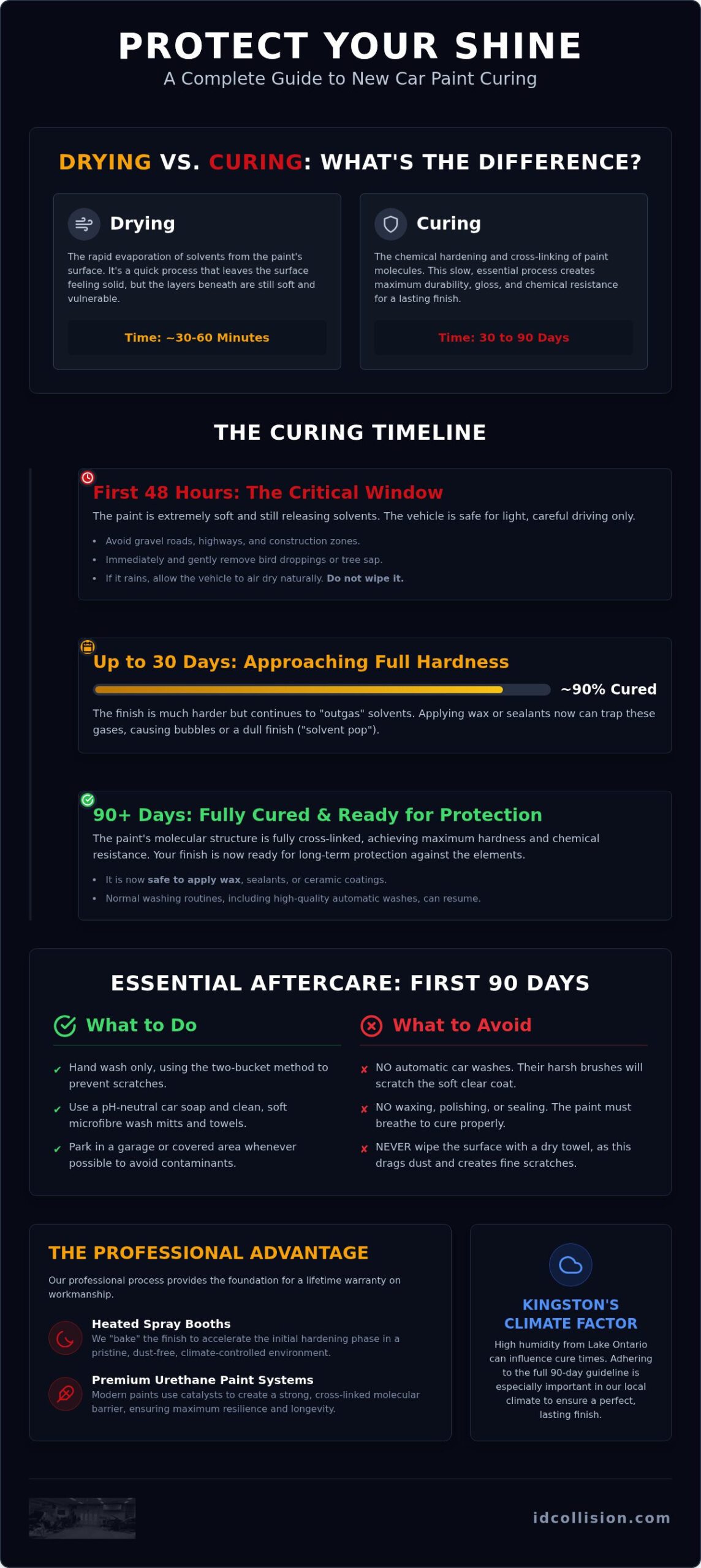
Drying is simply the evaporation of solvents from the paint surface. It happens relatively quickly, often within 30 to 60 minutes in a controlled environment. Curing, however, is the chemical hardening and cross-linking of molecules within the paint film. This is why a surface that feels dry can still be soft underneath; the solvents have left the top, but the internal structure hasn’t yet bonded. Curing is the vital process where paint achieves its maximum durability and chemical resistance.
Why the Distinction Matters for Your Vehicle’s Longevity
Think of the paint as a protective skin that is still maturing. Soft paint is highly vulnerable to environmental contaminants like bird droppings or tree sap, and even light physical pressure can leave a permanent mark. If you apply wax or sealants too early, you risk “solvent pop.” This occurs when escaping gases become trapped under a hard wax layer, creating tiny bubbles or dulling the finish. Understanding this distinction protects your automotive refinishing Kingston investment by ensuring you don’t rush the aftercare and jeopardize the final result.
The Chemical Process of Cross-Linking
Modern Automotive paint systems, particularly the urethanes used in professional shops, rely on catalysts to create a hard, resilient shell. This process, known as cross-linking, involves molecules forming tight bonds that create a unified barrier against the elements. Oxygen and temperature play critical roles in completing these bonds. While we use professional heated booths to “bake” the finish, this only accelerates the initial phase. It does not finish the curing process. The paint still needs weeks of exposure to the air to reach its full hardness and ensure the colour remains stable and vibrant.
The Post-Repair Timeline: From the Spray Booth to the Open Road
The moment your vehicle rolls out of our climate-controlled facility, it enters its most vulnerable state. While the surface feels dry to the touch, the internal structure is still stabilizing. Most drivers naturally wonder how long for new car paint to cure before they can resume their normal driving routine. We break this down into a specific timeline to help you protect that fresh finish from the unpredictable elements of the road.
The first 24 hours are critical for dust and moisture control. During this window, the paint is still releasing solvents. If moisture or heavy dust settles on the surface now, it can become permanently embedded as the film settles. By the 48-hour mark, the vehicle is generally safe for light driving. However, your journey toward a fully hardened finish has only just begun. Understanding how long for new car paint to cure is the best way to avoid preventable blemishes during these early stages.
The First 48 Hours: Safety and Initial Stability
During these first two days, your driving habits matter. Avoid gravel roads or heavy construction zones where flying debris is common. Fresh clear coat is still soft enough to harbour tiny stones or grit. Bird droppings and tree sap are also major threats; their acidic nature can etch into the finish in just a few hours. If it rains shortly after you leave the shop, don’t panic. Let the car air dry naturally. Do not attempt to wipe the rainwater away with a dry cloth, as this can cause fine scratches in the tender surface.
The 30-to-90 Day Window: Reaching Maximum Hardness
By the 30-day milestone, most modern urethane paints are approximately 90% cured. However, the final 10% is the most important for long-term durability. While EPA regulations on paint curing focus on industrial emissions and oven standards during the application phase, the secondary cure happens at ambient temperatures in your own driveway.
The paint continues “outgassing” solvents throughout this period. Applying wax or a heavy sealant too early effectively seals the surface. This traps those escaping solvents, which can lead to a hazy finish or even “solvent pop” bubbles. You’ll know the paint has reached full maturity when it passes the 90-day mark. At this stage, the finish is fully hardened and ready for its first high-quality wax. If you ever feel uncertain about the state of your finish, the experts at Insurance Direct Collision Centres LTD can provide a quick assessment to ensure your vehicle stays protected.
Environmental Factors: How Kingston’s Climate Impacts Curing
Kingston’s location along the shores of Lake Ontario creates a beautiful backdrop, but the resulting microclimate poses specific challenges for automotive finishes. While we have already established the general timeline for how long for new car paint to cure, local environmental factors can either assist or hinder that progress. High humidity levels, common in our region during the summer months, often slow down the evaporation of solvents. This moisture-laden air acts as a barrier, making it harder for the paint to “breathe” as it moves through the initial stages of stabilization.
To combat these local variables, professional collision repair Kingston Ontario facilities utilize climate-controlled spray booths. These systems manage the internal environment to ensure the finish settles correctly regardless of the weather outside. Scientific research into automotive paint curing process efficiency highlights that consistent temperature and airflow are the most significant predictors of a durable bond. Without this controlled start, a vehicle’s finish is at the mercy of the shifting Ontario winds.
Humidity and Temperature: The Ontario Summer Struggle
Extreme heat during a Kingston July can be just as problematic as high humidity. If the air is too hot and dry, the top layer of paint can “skin over” prematurely. This creates a hard surface while the layers underneath are still liquid, effectively trapping solvents and leading to a dull or hazy final appearance. We recommend garage-storing your vehicle during high-humidity alerts or heatwaves in those first 30 days. Keeping the car in a shaded, stable environment allows the chemical cross-linking to proceed at a natural, steady pace.
Winter Curing Challenges: Road Salt and Freezing Temps
The greatest threat to a fresh finish in Kingston is undoubtedly our winter road maintenance. Calcium chloride and traditional road salt are incredibly corrosive. On a fully cured vehicle, they are a nuisance; on a fresh finish, they are a hazard. If you are wondering how long for new car paint to cure during a cold snap, realize that freezing temperatures can actually stall the chemical process entirely. The molecules simply stop moving and bonding.
During the first 30 days of a winter repair, you must be diligent about rinsing your vehicle. Use low-pressure water to clear away salt spray, but do not use a brush or even a sponge. The salt crystals act like sandpaper against the still-maturing clear coat. By keeping the surface clean without applying physical pressure, you allow the finish to harden safely despite the harsh Canadian elements.
Essential Aftercare: Protecting Your Fresh Finish in the First 90 Days
Knowing how long for new car paint to cure is the foundation of your vehicle’s protection plan. During this 90-day window, your clear coat remains porous as it actively releases gases from the underlying layers. If you treat it like an old finish, you risk permanent damage that no amount of buffing can fix. Follow this definitive checklist to ensure your repair remains invisible and your warranty stays intact.
- Hand wash only: Use the two-bucket method to prevent grit from being dragged across the soft surface.
- Avoid commercial car washes: Mechanical brushes are the primary enemy of a new clear coat. Even touchless washes use high-pressure chemicals that can be too aggressive for a fresh finish during the first month.
- Park in the shade: This prevents “water spotting.” While the paint is soft, minerals in tap water or rain can bake into the surface, leaving permanent etchings.
- Remove debris immediately: Bird droppings and tree sap are acidic. Lift them off gently with a wet microfibre cloth rather than scrubbing.
Washing Protocols: Avoiding Swirls and Scratches
Your choice of cleaning agents is vital. Never use dish soap or harsh household detergents. These are designed to strip grease from pans, and they are far too alkaline for automotive finishes. Use a dedicated pH-neutral car wash soap. It provides the lubrication needed to lift Kingston road dust without scratching the surface. When you finish, always use clean, high-quality microfibre towels for drying. Avoid chamois or old bath towels, which can trap abrasive particles and create swirl marks in the maturing paint.
The Waxing Waiting Game: Why Patience Pays Off
Patience is your greatest ally during the curing phase. While you may want to add extra shine immediately, applying a traditional carnauba wax or a ceramic sealant before the 90-day mark is a mistake. These products create a waterproof seal that prevents necessary outgassing. If you must add some protection, look for a “breathable” glaze specifically formulated for fresh repairs. These allow solvents to escape while providing a temporary barrier against the elements. Once you have cleared the 90-day milestone, you can safely return to your preferred long-term protection routine. If you notice any unusual dulling or texture changes during this period, contact the team at Insurance Direct Collision Centres LTD for a professional inspection of your finish.
Professional Refinishing at Insurance Direct Collision Centres LTD: Quality You Can Trust
At Insurance Direct Collision Centres LTD, we don’t just apply paint; we manage a scientific process designed for longevity. While you now understand how long for new car paint to cure in your own driveway, the foundation of that success is laid in our shop. We utilize premium PPG paint systems to ensure a flawless colour match for both domestic and import vehicles. Our team takes pride in being more than just technicians. We act as your advocates, educating every driver on the nuances of auto body restoration services so you leave our centre with complete confidence in your vehicle’s future.
Many shops provide a finish, but we provide a promise that is only possible when professional application meets the owner’s understanding of how long for new car paint to cure. We realize that the repair process can be stressful. Our goal is to take that burden off your shoulders by doing things correctly the first time. By combining advanced chemistry with local pride, we ensure that your vehicle doesn’t just look better; it stays protected against the unique challenges of the Kingston climate.
Advanced Paint Booth Technology in Kingston
The environment is the biggest variable in any refinishing project. Our professional heated spray booths allow us to eliminate dust, debris, and Lake Ontario humidity during the most critical moments of application. By controlling the airflow and temperature, we can initiate “baking” cycles that force a harder, more durable initial cure. This precision means your car is better equipped to handle the road the moment it leaves our care. We also prioritize the health of our community by using environmentally friendly, low-VOC paint systems that deliver high performance without a heavy chemical footprint.
Lifetime Warranty: Our Commitment to Your Car’s Finish
We believe that a repair should last as long as you own your vehicle. This is why Insurance Direct Collision Centres LTD offers a lifetime warranty on our workmanship. This guarantee covers essential factors like paint adhesion and gloss retention, ensuring your car continues to look its best years after the initial repair. However, this level of protection is a partnership. Our precise application provides the foundation, and your careful aftercare during the first 90 days ensures the finish reaches its full potential. We stand by our Kingston neighbours long after the job is done, providing the reassurance you need to drive with peace of mind.
Ready to restore your vehicle to its former glory? Contact Insurance Direct Collision Centres LTD for a free estimate on your paint repair today and experience the difference that professional craftsmanship makes.
Secure Your Vehicle’s Future Shine
You now have the roadmap to navigate the critical 90-day window following your repair. Remember that while your car is safe for the Kingston roads after 48 hours, the internal chemical hardening process is what truly guards against the elements. Staying patient with waxing and opting for gentle hand washes ensures that your new finish remains as resilient as it is beautiful. Understanding exactly how long for new car paint to cure is the best way to honour the craftsmanship put into your vehicle and protect your investment for the long haul.
At Insurance Direct Collision, we combine expert colour matching for all makes and models with the peace of mind of a lifetime warranty on all workmanship. As a locally owned and operated business in Kingston, we take personal pride in every vehicle that leaves our centre. We are ready to help you restore your car to its original glory while providing the guidance you need for long-term success. We believe in doing things correctly the first time so you can drive with absolute confidence.
Get a Free Professional Paint Estimate in Kingston
We look forward to helping you get back on the road with a finish that stays flawless for years to come.
Frequently Asked Questions
How long should I wait to wash my car after it has been painted?
You should wait at least 48 to 72 hours before performing a gentle hand wash on your vehicle. During this initial window, the surface is still stabilizing and remains highly susceptible to micro-scratches. Always use a pH-neutral soap and plenty of water to lubricate the surface, ensuring that any Kingston road dust is lifted away rather than scrubbed into the fresh clear coat.
Can I use a touchless car wash on new paint?
It is best to avoid all automatic car washes, including touchless systems, for at least 30 days. While touchless washes don’t use brushes, they rely on high-pressure water jets and aggressive detergents to compensate. These concentrated chemicals can be too harsh for a finish that is still maturing, potentially leading to dulling or chemical etching before the paint has fully hardened.
When is it safe to wax my car after a professional paint job?
We recommend waiting a full 90 days before applying any wax or sealant to your new finish. Drivers often ask how long for new car paint to cure because they want to add extra protection immediately. However, waxing too early seals the surface and traps escaping solvents. This blockage can cause “solvent pop” bubbles or a hazy appearance that ruins the showroom shine you just invested in.
What happens if it rains on my new car paint before it is cured?
Rain is generally not a threat once you have passed the first 24 hours of drying time. If your car gets wet, the most important rule is to let it air dry naturally. Do not attempt to wipe the rainwater away with a towel or chamois. The paint is still soft, and any dirt trapped in the rain droplets could act like sandpaper if you apply physical pressure to the surface.
Can I drive my car on the highway immediately after a repaint?
Avoid highway driving for the first 48 hours if possible. High speeds significantly increase the force of impact from insects, road salt, and small stones. Since the clear coat hasn’t reached its maximum hardness yet, these common road hazards can easily chip or embed themselves into your new finish. Stick to lower-speed city streets while the paint gains its initial stability.
Why does my new car paint still smell like chemicals?
That noticeable scent is a natural part of the “outgassing” process where solvents evaporate from the paint layers. It is a sign that the chemical cross-linking is still active and the finish is moving toward its final state. The smell will gradually dissipate over the first few weeks as the solvents leave the film and the paint reaches its full durability.
How do I remove bird droppings from fresh paint without scratching it?
Use a clean, wet microfibre cloth to gently lift the debris away without applying any downward pressure. Bird droppings are highly acidic and can etch into a fresh finish very quickly, so they must be removed immediately. Never use a scraper or your fingernail. If the debris is dried on, soak it with a wet cloth for several minutes until it softens enough to be wiped away safely.
Does cold weather affect how long it takes for car paint to cure?
Yes, freezing temperatures can significantly slow down or even stall the chemical bonding process. When considering how long for new car paint to cure in a Canadian winter, realize that the molecules require warmth to move and bond effectively. This is why we utilize heated spray booths to give the finish a professional head start before it faces the challenging Kingston winter elements.